Saturday, September 26, 2026

When Intel Mac Security Updates Stop

You bought the 16-inch MacBook Pro in 2019 because it was the one built to last. It has lasted. The keyboard is fine and the screen still looks sharp, but the purchase never told you the one date that matters now: when Intel Mac security updates stop, a deadline Apple set years after your receipt was filed. That date is close enough to plan around, and the bill it brings is bigger than one laptop.

Aging Intel MacBook Pro beside a calendar showing when Intel Mac security updates end

macOS 27 launched on 14 September 2026 for M1 and later Macs plus the A18 Pro MacBook Neo, and for no Intel machine at all, Macworld's compatibility guide confirmed that day. Your Intel Mac stops gaining features now.

TL;DR: a late Intel Mac on Tahoe is safe to keep through 2027, but its Intel-only apps need a plan before you buy the next Mac.

  • macOS Tahoe 26 is the final macOS for any Intel Mac.
  • Patches through late 2027 look firm; a fall 2028 end is AppleInsider's estimate, not Apple policy.
  • After macOS 27, Intel-only apps stop running on Apple silicon, so an unconverted app becomes a second purchase.
  • Audit your apps now, for free, and budget the replacement for 2027.

Why Intel Mac Security Updates Now Have an End Date

Intel Macs now have a security end date because macOS Tahoe 26 is the last release Apple built for Intel processors, and Apple keeps patching an older macOS only for a limited stretch after newer versions replace it.

Tahoe was already a filter. Apple's compatibility page lists only these Intel machines: the 2019 16-inch MacBook Pro, the 2020 13-inch MacBook Pro with four Thunderbolt 3 ports, the 2020 27-inch iMac and the 2019 Mac Pro. Missing from that list? Your clock is already shorter.

Windows owners just watched Microsoft blink, with consumer ESU for Windows 10 quietly extended to October 2027. Apple sells no such extension, so there is no paid lever to pull when Tahoe's patches stop. Nor would I bank on a cheaper replacement while the AI-driven memory shortage behind 2026 smartphone price hikes keeps pressure on RAM.

Four numbers decide your timing. Macworld's September 2026 guide supplies the patch window it expects for Tahoe and the hardware floor for macOS 27's AI Siri voice features. The firm share is my arithmetic, that floor against AppleInsider's June 2026 estimate of a fall 2028 end.

Expected Tahoe Patches

12+ months

Safe floor: late 2027

Minimum for AI Siri Voice

M3 + 12 GB

Rules out every M1, M2

Share of Runway That's Firm

50%

Half your plan is guesswork

Cost to Audit Your Apps

$0

Free list of what breaks

The free audit matters most. On the Intel Mac, System Information's Applications list shows each app's kind, and anything marked Intel rather than Universal needs a new version on Apple silicon. Already moved? Apple says macOS 26.4 may show a notice when an app leans on Rosetta.

"

Only the first year is anything like firm. Past late 2027 you are budgeting on Apple's habits, and habits are not warranties.

Should You Keep or Replace an Intel Mac?

Keep a Mac on Apple's Tahoe list through 2027 if its apps already run on Apple silicon, but sort out any Intel-only app first, since any replacement running macOS 28 or later will refuse to open it.

The common advice says replace now. I think that's backwards for anyone on the Tahoe list, because the new Mac's real price includes every licence you buy again.

Dimension Keep vs Replace What it means for you
๐Ÿ’ฐ Spend now Keep $0 until about 2028
Replace A new Mac in 2026
✅ Waiting defers the bill about two years
๐Ÿงพ Software bill Keep Intel apps run as bought
Replace Rosetta covers them to 2027
⚠️ Unconverted apps become a second purchase
⏱ Patch runway Keep Floor late 2027, est. 2028
Replace Current macOS 27 onward
✅ Either path covers you through 2027
๐Ÿ“Š macOS releases Keep Tahoe 26 is the last
Replace 27 now, 28 in fall 2027
❌ No new features on the Intel side
๐Ÿ”‹ Hardware life Keep About 9 years, 2019 16-inch
Replace A fresh clock, no policy
✅ Late Intel buyers got their money's worth
๐Ÿ›  Workarounds Keep None needed to 2028
Replace Paid emulation after 2027
⚠️ Adds a licence to keep old code alive
๐Ÿ Best suited for Keep Tahoe-list Mac, apps native
Replace Pre-2019 Intel, or needs 27
๐Ÿ Everyone replaces by 2028 anyway

Read the software row against the patch row. Your Mac is probably patched to fall 2028, but the bridge for Intel-only apps on a replacement closes in fall 2027, so the software decision is roughly a year more urgent than the hardware one. That gap is my reading of the dates, not a published figure.

Sep 2025. macOS 26.4. 14 Sep 2026. Fall 2027. Fall 2028 (est.). Tahoe 26 ships. Last Intel macOS. Rosetta notices. Start your app list. macOS 27 ships. M1 and later only. macOS 28 ships. Rosetta: games only. Tahoe patches end. Estimate, not policy.

Settle your Intel-only apps first, because their bridge closes before Tahoe's last expected patch. Dates are from Apple, Macworld and AppleInsider; the 2028 end point is AppleInsider's estimate, not Apple's.

What Happens to Intel Apps When Rosetta Is Removed?

Once macOS 28 arrives in fall 2027, apps built only for Intel stop opening on Apple silicon Macs, because Apple has named macOS 27 as the last release with general Rosetta support.

Apple's developer notice of 1 September 2026 puts it without hedging: after that update, Intel-only apps "will no longer run on Mac computers with Apple silicon." So a licence bought years ago now expires against a Mac you have not bought yet.

The one carve-out covers "older, unmaintained gaming titles that rely on Intel-based frameworks." Old games survive. Your accounting package does not. AppleInsider names CrossOver and Parallels as workarounds, and I'd treat either as a bridge, not a home: another licence to preserve abandoned code, retested at every macOS update. Or it holds for years. Nobody can promise that, which is rather the point.

Watch these before the calendar forces your hand:

  • Subscriptions raising their macOS minimum before Tahoe's patches end.
  • Drivers and plug-ins that lag their host app's Apple silicon version.
  • Machine-locked licences to deactivate before you wipe the Intel Mac.
  • A used M-series Mac with no honest health report, the same trap as used-EV resale with no battery State-of-Health standard.

Key takeaways to act on: check these about your own Mac

  • Your exact model appears on Apple's Tahoe compatibility page, not just its year.
  • System Information lists an app you need as Intel rather than Universal.
  • Its developer has announced no Apple silicon build.
  • You can live without new macOS features until you replace.

This week, open System Information on the Intel Mac, sort Applications by Kind, and email the developer of every Intel-only app you depend on asking for their Apple silicon date. That list, not the calendar, decides whether you buy in 2027 or ride Tahoe to its last patch.

Thursday, September 10, 2026

Moving From Windows To Mac: What Actually Ports

Your shop counter still runs the same Windows 10 desktop, and now the retailer who told you it was finished is selling you a Mac instead. Both pitches use the same fear and neither one earns your money by default. Before you decide, it helps to know exactly what survives the move and what does not, because switching from Windows to Mac is a real option this year for a different reason than the one most sales counters are using.

Desktop PC beside a Mac laptop showing file transfer switching from windows to mac

Updated September 2026: Windows 10 is not forcing this decision. Microsoft's free consumer security patching now runs to 12 October 2027, so a working PC has time. What actually moves you is whether your files, apps and habits survive a change of operating system, not a deadline.

  • Documents, photos and browser data move cleanly through cloud sync or Migration Assistant.
  • Microsoft 365, Chrome and most creative software run natively on a Mac already.
  • Boot Camp, the old way to run Windows itself on a Mac, does not exist on current Apple Silicon machines.
  • A handful of Windows-only tools are the real blocker, and they are worth checking before you buy.

Why Switch From Windows To Mac At All?

You are not forced to, since Microsoft's extended security patching for Windows 10 now runs free through 12 October 2027 for most home users, one year later than the date originally advertised.

That extension changes the shape of the decision. Instead of an emergency replacement, switching from Windows to Mac becomes a choice you can research properly, the same way it is worth reading the memory squeeze that pushed component prices up across 2026 before buying any new machine at all. A small office carrying a mixed fleet, the kind that already standardised on remote work tooling, has even less reason to rush a hardware swap that a software update does not require.

Windows 10 Patches Until

12 Oct 2027

Free consumer cover, no rush

Boot Camp On Apple Silicon

Not available

Dual-boot Windows is gone

Files Migration Assistant Moves

Docs, photos, mail

Not installed Windows apps

Microsoft 365 On Mac

Fully native

Word, Excel, Outlook, Teams

"

Your files will make the trip without complaint. Whether your software does depends entirely on what it is, and that is the question worth answering before the machine is bought.

What Actually Ports Without Trouble?

Almost everything you would call your own data moves cleanly, because documents, photos and mail live in formats or cloud accounts that were never tied to Windows in the first place.

Apple's Migration Assistant reads a Windows PC directly over the same network and copies across documents, desktop files, photos, bookmarks and mail accounts in one pass. Anything already sitting in OneDrive, Google Drive or a similar service arrives the moment you sign back into that account, no transfer tool required at all. Browser bookmarks, saved passwords and open tabs follow the same route, since Chrome and Edge both sync through your Google or Microsoft account rather than through the operating system underneath them. Photos are the one category worth double-checking by hand, because a phone that has always backed up to Google Photos will carry on exactly as before, while a folder of pictures copied only onto the old PC's drive needs Migration Assistant or a manual copy to make the trip, and it is worth confirming that copy exists before you wipe anything.

  • Cloud-stored files: OneDrive, Google Drive and Dropbox content reappears as soon as you sign in on the Mac.
  • Microsoft 365: Word, Excel, PowerPoint, Outlook and Teams are native Mac apps with the same file formats.
  • Browser data: bookmarks, saved passwords and history sync through your Chrome or Edge account.
  • Creative software: Adobe Creative Cloud and most subscription design tools run natively on macOS already.

What Do You Have To Rebuild Or Replace?

The honest gap is Windows-only software with no Mac version, since a Mac cannot run a Windows .exe file directly, and the two workarounds each cost you something.

Older Intel-based Macs could dual-boot into actual Windows using Apple's Boot Camp, but that option was dropped once Apple moved to its own Apple Silicon chips, and it has not come back. What is left on a current Mac is a virtual machine, running Windows inside macOS through software such as Parallels Desktop or VMware Fusion, which works for most business and accounting tools but costs a separate Windows licence and a slice of performance. Specialised industry software, older tax filing tools, certain accounting packages built for Indian GST filing, and peripherals with Windows-only drivers are the categories most likely to need this route, and it is worth testing each one before you commit rather than after, the same way a proper backup habit is worth building before a drive fails rather than after.

What You UseOn A MacWhat To Check First
Office documentsNative Word, Excel, PowerPoint (365 or 2021)Complex macros may need review
Web browsingChrome, Edge and Safari all nativeSign in first to pull down bookmarks
Video callsZoom, Teams and Meet all nativeCamera and mic just work
PrintersAirPrint covers printers made since 2010Old USB-only printers may lack drivers
Accounting or tax softwareOften Windows-onlyTest the vendor's Mac or web version first
Legacy Windows-only toolsNeeds a second Windows 11 licenceParallels or VMware Fusion, plus a licence
Keyboard habitsCmd replaces Ctrl for most shortcutsAbout 7 days of muscle memory, nothing more

Read that table as a checklist rather than a verdict, and run it against your own software before you spend anything, because the honest answer changes depending entirely on what sits in your own folder of installed programs.

Most of what you use daily just moves. A few tools need a plan. Ports cleanly Files, browser data Ports cleanly Office, Adobe, Zoom Ports cleanly Printers, most peripherals Needs a plan Windows-only software Test the one tool you are unsure of before you buy the machine.

What This Move Will Not Fix

Switching to a Mac does not make a slow internet connection faster and does not rescue files you never backed up, since a new operating system changes the software around your data and nothing about the data's own condition.

It also will not save you money by itself. A Mac capable of running that virtual machine comfortably costs more upfront than the Windows PC it replaces, and if your household's real blocker turns out to be one accounting package with no Mac equivalent, buying the machine before testing that one piece of software is the expensive way to find out. Test it on a Mac at a store, or in a trial virtual machine, before the counter conversation happens rather than after. A half hour spent confirming that one program runs is cheaper than discovering, a week after the return window closes, that your household's one essential tool never had a Mac version to begin with.

Key Takeaways

  • Windows 10 patches free until 12 October 2027, so nothing forces this decision this month.
  • Files, browser data, Office and most creative software move to a Mac without trouble.
  • Boot Camp is gone on current Apple Silicon Macs; a Windows virtual machine is the only fallback.
  • Test your one uncertain piece of software before buying, not after.

So before the next sales pitch, make one list: the software you actually use every week, and whether each item already runs on a Mac. Everything else on your desktop, the documents, the photos, the browser tabs, is already going to make the trip.

Related: when Intel Mac security updates stop and what that deadline means for your Mac

Friday, September 4, 2026

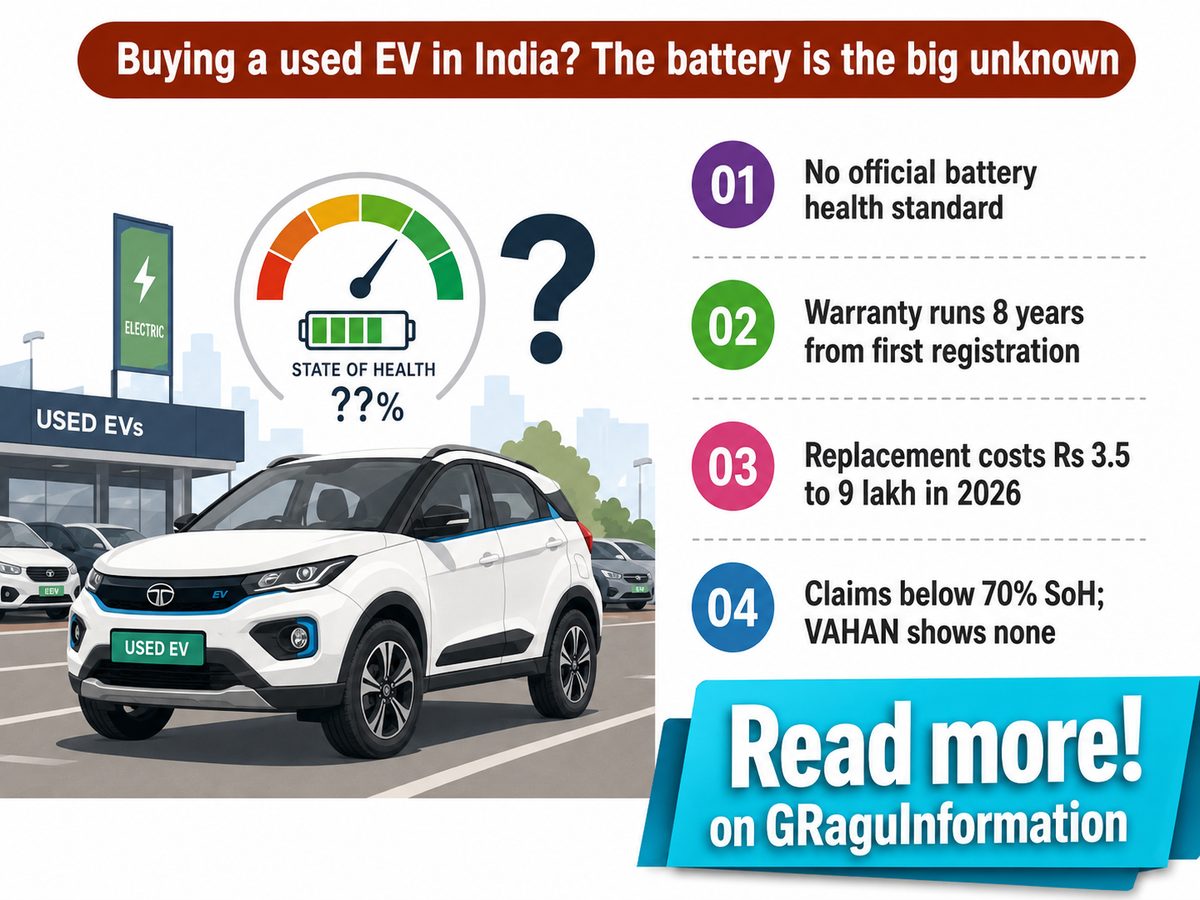
Used EV Resale In India: Nobody Can Price The Battery

A three-year-old Nexon EV comes up on a used-car listing. One owner, full service history, photographed in good light. What the listing does not say, because nobody in India requires it to, is how much of the battery is left. The seller does not know. Neither does the dealer, and the bank lending against it certainly doesn't. The price sits there anyway, and somebody is going to pay it.

Used EV Resale In India: Nobody Can Price The Battery
India has no accepted way to certify how much life is left in a used EV battery, so resale prices, loan values and insurance payouts are all set by proxy. Warranty cover does transfer, though rarely on the terms sellers describe. Check the paperwork before you check the paint.

Why It Matters

The used market is where an electric car finally gets judged. First owners buy on running cost and a subsidy. Second owners buy on risk, and the largest risk in an EV is a component that degrades quietly, invisibly and expensively. Petrol cars gave everyone a shared vocabulary for that. Compression. Oil burn. A timing belt due at a known kilometre figure, printed in the manual. Batteries have no equivalent that anyone in this country agrees on, and the industry has been perfectly comfortable with that, because ambiguity favours whoever is setting the price.

The gap is not theoretical. Business Standard reported in October 2025 that used EVs made up 0.43% of India's used-car market in 2024, up from 0.08% two years earlier, which reads like growth until you notice how small the base is. Cars sold new between 2020 and 2023 are only reaching second hands now. So there is almost no price history to argue from, no settled discount for a tired pack, and no government record that carries State of Health at all. VAHAN will give you the registration date and the pending challans. It will not give you the one number that decides whether the car is worth buying. Resale reality tends to arrive late for Indian buyers, much as it did for Ford owners waiting on the Chennai plant restart.

Four numbers frame the entire negotiation, and not one of them appears in a typical listing.

Warranty clock

8 years

Counted from first registration

Pack replacement

Rs 3.5 to 9 lakh

Nexon EV estimates, 2026

EVs registered

3.5 million

India, FY26, per SIAM

Battery share of cost

Up to 40%

Of the car's original price

The warranty clock is the one that catches people out. It starts on the day the first owner registered the car, not the day you take delivery, so every month they enjoyed is a month you never get. Buy deep into that window and you are really buying an out-of-warranty battery with a short grace period stapled on. Price it that way. The conversation gets honest fast.

"

A pack that costs more to replace than the car will fetch is not a repair job. It is a write-off with a service appointment attached.

What Actually Moves The Price

Sellers want to talk about range on a full charge. That number is mostly weather and driving style. The items below are checkable before money moves, and each one pushes the price in a direction you can defend out loud.

Category Detail Insight
Claim floor Tata pays a battery claim only below 70% State of Health Slow fade above that stays yours
Distance cap Tata 1,60,000 km, MG 1,20,000 to 1,50,000 km, Harrier.ev 2,00,000 km Check the odometer against the brand cap
Transfer route Tata and Hyundai move on the RC update; MG and Mahindra need a dealer request Start the request before you pay
Transfer cost Mahindra may charge Rs 500 to 1,500 plus a BMS health check Budget it into the negotiation
First owner only Tata's 15-year lifetime cover does not survive a sale Resale reverts to the standard cover
Void triggers Non-approved chargers or high voltage work outside the network One void ends the whole battery cover
Insurance basis IRDAI depreciation runs 5% at six months to 50% at four to five years Written for engines, applied to packs
Paper check Rs 49 for the RC check, Rs 49 for challans, Rs 79 for both Cheapest hour in the whole purchase

Read that middle column as one sentence: the loss is front-loaded and the protection is time-boxed. Skipping the cheap checks is exactly how buyers end up funding the expensive one.

Value left after depreciation · Indian used cars 1 year 79% left · 21% gone 3 years 67% left · 33% gone 5 years 59% left · 41% gone

Autocar India and Spinny's Mobility Intelligence Report 2026, built on more than 11,000 transactions across nine cities, puts used-car depreciation at 21% after one year, 33% after three and 41% after five, with a three-year-old car averaging Rs 8.38 lakh; the report also flags that EVs sit outside this curve because battery health has no agreed benchmark.

Friction Points

The advice you will hear everywhere is to ask for a battery health report. Sensible in the abstract, close to useless in practice today. That report comes from a diagnostic run by the same dealer setting the price, on a scale with no national definition, with no obligation to disclose how the reading was taken. Where I genuinely don't know the answer: whether any dealer-run readout can be trusted while the same dealer owns the margin on the sale. That is a stance, not a finding, and no rule currently forces the split.

Insurance is the second trap. Insurers still work off depreciation tables written for engines and gearboxes, so a total loss settlement can quietly ignore where most of an electric car's value actually sits. That mismatch will correct eventually, probably faster than the pricing side does, but until it does the buyer carries it. Anyone who followed the memory shortage behind phone price hikes will recognise the shape of it: the market reprices long before the paperwork catches up.

Before any money moves, get these in writing:

  • Confirmation from the manufacturer, not the dealer, that the battery warranty survives the transfer, and on exactly what terms.
  • The full in-network service history, with every gap explained rather than skipped past.
  • The charging setup the first owner actually used at home, in writing from them.
  • The odometer reading measured against that brand's own distance cap, which varies more than buyers expect.

Key takeaways before you pay

  • Under GST 2.0 an EV sits at 5% with no compensation cess, part of why a used electric car's sticker looks kind to a first-time buyer.
  • Get the brand's written transfer acknowledgement before handover. A dealer's verbal assurance exists nowhere on file when a claim is raised two years later.
  • Have the State of Health diagnostic run inside the manufacturer's own service network, and keep the printout with the invoice and service book.

Treat a used EV as two purchases: a car, and a battery with a remaining term. If the seller cannot document the second one, walk away, or price the car as though the pack goes out of warranty tomorrow. Ask for the transfer confirmation in writing before you hand over the token amount, never after.

Keep reading

Wednesday, August 19, 2026

Ford's Chennai Restart Changes Nothing for EcoSport Owners

Your 2019 EcoSport is due for its annual service next month. You open the news on your phone over breakfast and there it is, in every automotive feed at once: Ford is coming back to Chennai. For about four seconds, that feels like good news.

It isn't. Not for you, anyway.

Ford's Chennai Restart Changes Nothing For EcoSport Owners In India
TL;DR: Ford is reviving its Maraimalai Nagar plant to build engines for export, not cars for India. Owner support, parts supply and resale value all sit exactly where they did before the announcement. If you drive a Ford here, the maths has not moved.

Why It Matters

Every Indian outlet ran the story as a homecoming. Ford returns. Ford is back. And technically, yes, a dormant plant on the edge of Chennai is going to make noise again. But read the actual announcement instead of the headline and the shape of it changes completely. The line will build next-generation engines for overseas markets. No vehicle assembly. Nothing that ends up on a showroom floor in Coimbatore or Chandigarh.

This matters because Ford owners here have spent five years being told to hold on. Hold on, the parts will keep coming. Hold on, the workshops will survive. Mostly they have, and that is the honest half of the story. Anyone who has chased the intermittent AC cooling fault that shows up on EcoSport diesels through an authorised workshop already knows the pattern: the component arrives, the diagnosis is the slow part. Same with the unglamorous stuff, rodent damage to wiring looms and the rest, where supply was never really the bottleneck. Five years of that builds a kind of grudging confidence, and it is the only thing that actually keeps these cars on the road.

Here is the figure worth holding on to. Ford's own September 2021 restructuring statement put the cost of walking away at about $2.0 billion in pre-tax special item charges, and in the same document the company committed to service, aftermarket parts and warranty coverage for cars already sold. That was not a press-release gesture. A company that books two billion dollars of pain to stop selling cars in a market has thought hard about the piece it chose to keep. Which is why the Chennai story reads oddly to me. The thing owners actually depend on was settled back then, and last October's news does not touch it. The scale of the new commitment is worth seeing in one place, because the shape of it is the entire argument.

Restart runway

2029

First engines, not sooner

Fresh investment

Rs 3,250 crore

Announced 31 October 2025

Annual engine capacity

235,000

All bound for overseas markets

Share reaching Indian buyers

0%

No local vehicle sales planned

Take the capacity line and think about what it physically requires. An engine plant at that scale is a supply-chain asset, not a retail one. It needs vendors, machining tolerances, quality gates and freight lanes to a port. It does not need dealers, showrooms, test drives, or a model homologated for Indian roads. None of that build-out creates a Ford you can go and buy here, and none of it changes the depot that ships your fuel filter next March.

"

Every engine Chennai builds will leave the country. Not one of them ends up under the bonnet of a car an Indian buyer can walk into a showroom and drive away.

Strip the announcement down to the parts an owner can actually act on, and the whole thing fits in a single table.

Category Detail Insight
Site Maraimalai Nagar, Chennai, idle for nearly five years Old plant, completely new purpose
Output Next-generation engines only, with no vehicle assembly Engines leave, cars never arrive
Hiring About 600 new roles at the revived site Real jobs, unrelated to ownership
Owner support Service, parts and warranty continue as before Untouched by the Chennai announcement
Parts network Depots at Delhi, Chennai, Mumbai, Sanand and Kolkata Five hubs feed the whole country
Brand posture Booking, doorstep service, roadside help, no purchase path A service brand, not a seller
Resale Orphan-brand discount already priced into used values That discount is already baked in

Read down the middle column and the split is hard to miss. Everything Ford has committed to in this country since the shutdown is about keeping cars that already exist on the road. Everything it announced last October is about shipping hardware out. Those are two separate businesses that happen to share a badge, and confusing them is how an owner ends up making a bad decision on a good week.

Sales end  ·   Service only  ·   Plant announced  ·   Exports begin

The Chennai engine line sits at the far right of that sequence, three full stages away from anything an Indian buyer could ever drive off a lot.

Friction Points

None of this makes Ford ownership in India comfortable. It makes the discomfort stable, which is a different and slightly better thing. The conventional advice after the shutdown was blunt: sell the orphan, take the hit early, move on. I think that advice has aged badly for anyone who held the car past the first couple of years. The depreciation cliff already happened, and you already paid for it. Selling today just realises a loss the market has finished pricing, and whatever replaces the car costs more than it did in January. The honest arithmetic of upgrading out of an ageing car rarely favours panic.

Where I genuinely don't know the answer, and I don't think anyone does yet, is how long a parts-and-service-only presence can hold used values before buyers stop distinguishing a supported orphan from an abandoned one. No manufacturer has run that experiment to the end here. Ten years is the number people repeat, though it's a reasonable-sounding guess rather than a demonstrated shelf life. Anyone telling you confidently either way is guessing too, just with more conviction. And the surrounding cost of keeping a car on Indian roads keeps climbing regardless, from insurance to the steadily rising toll charges on national highways.

So the sensible posture is unsentimental. Treat the car as a machine with a known support horizon, budget accordingly, and stop reading manufacturer news as if it were personal. A few things genuinely deserve attention this year:

  • Body panels and collision parts move slower through the network than mechanical spares. Price a bumper before you assume a minor knock is cheap to fix.
  • Independent garages will quote lower and fit non-genuine components. On a diesel EcoSport, that is precisely where air-conditioning and fuel-system trouble tends to start.
  • Insurance IDV drops faster on discontinued models. Check the figure at renewal rather than accepting the rollover number your insurer offers.
  • If the plan is to replace it with an electric car, price that ownership honestly first, because the real story on EV battery degradation cuts both ways.

What the service side actually looks like right now

Ford's Indian website is now built entirely around service booking, doorstep pickup, collision parts and owner support. There is no route on it to buying a new car.

Roadside assistance runs on published toll-free lines around the clock, which is more than a few brands still actively selling cars here manage to offer.

The line the company leads with today is Committed To Serve. Read that literally rather than as marketing, because as a description of the Indian operation it is simply accurate.

Book the service. Keep the car. The Chennai plant is a genuine story for Tamil Nadu's export ledger and for the people who will work there, and it is noise for your service book. Go and price a bumper this week, then decide.

Saturday, July 25, 2026

The Memory Shortage Behind Every Phone Price Hike In 2026

You walk into the store expecting January's price. The Redmi Note 15 you shortlisted is now ₹26,999, two thousand rupees above the figure in your notes, and the salesman shrugs like you should have seen it coming. He is not gouging you. That handset genuinely costs more to build than it did six months ago, and the reason has almost nothing to do with the handset.

The Memory Shortage Behind Every Phone Price Hike In 2026
TL;DR: Memory makers redirected capacity to AI data centres, so DRAM and NAND now cost more, and phone brands are passing that through to you. Relief is not close. Waiting six months will not save you money. Buy the storage you need today, not the upgrade you imagine later.

Why Your Handset Bill Went Up Without A Single New Feature

Every phone in your price bracket shares a supply chain with the AI industry, and in 2026 the AI industry outbid you. Samsung, SK hynix and Micron all make high bandwidth memory and high capacity server DRAM alongside the low power LPDDR that goes into handsets, and the server parts carry fatter margins. Capacity moved. The memory shortage that followed is not a manufacturing accident or a factory fire, it is a deliberate allocation decision, repeated quarter after quarter, by three companies that between them control most of the world's supply.

Then the bill arrives at the bottom of the market first. IDC's 2026 analysis puts the bill of materials on sub-$200 smartphones up 20% to 30% since the start of the year, with average selling prices across the whole category expected to rise 6.9%. Read those two numbers together and you get the shape of the problem: cheap phones absorbed the biggest cost jump, and cheap phones are exactly where buyers have the least room to absorb anything. The comfortable advice going around, that you should simply sit tight until prices normalise, is wrong this cycle, and I would push back on anyone repeating it. Component cycles usually correct in two or three quarters. This one has a customer, AI infrastructure, that does not care what a phone costs.

It also changes what you should be paying attention to on a spec sheet. Storage and RAM stopped being throwaway line items and became the two numbers that actually move the price, which makes every "base variant" decision consequential in a way it was not in 2024. Anyone who has watched a phone fill up knows how that story ends, and it is the same complaint behind the case for letting WhatsApp offload its storage hoard to OneDrive and the older argument that Windows still needs a proper Time Machine style backup layer. Software has been papering over thin storage for years. Now the paper costs money.

The four figures below are the ones worth carrying into a showroom, because each one answers a question a salesman will dodge.

SHORTAGE RUNWAY
Into 2027
Samsung and SK hynix warning
DESKTOP MEMORY FLOOR
$375
Cheapest 32GB DDR5 kit
GLOBAL SHIPMENTS
-2.1%
Counterpoint 2026 forecast
Q3 DRAM CONTRACTS
13-18%
TrendForce quarterly rise

That shipment forecast is the one people misread. A falling market normally means discounts, because unsold stock is expensive to hold. Not here. Brands are cutting production plans instead of cutting prices, which means fewer units chasing the same buyers and no clearance season to wait for. Scarcity is being managed, not competed away.

Three Ways To Play It, And What Each One Actually Costs

There are only three real options once you accept that the price on the shelf is the price. Buy now at the inflated number, hold out for relief that may not arrive before your current phone dies, or step back a generation and buy last year's hardware while it still exists. Each carries a different risk, and none of them is free.

Dimension Buy Now Wait For Relief Last-Gen Or Refurbished
Upfront cost Highest, paid today Unknown, likely higher Lowest available
RAM and storage you get Current tiers, before further trimming Risk of quietly reduced base variants Pre-squeeze configurations, often generous
Warranty position Full, from purchase date Full, whenever you commit Partial or seller-backed only
Price risk You absorb it once and stop worrying Open ended, repriced every quarter Rising too, as old stock gets scarce
Software support runway Longest remaining Longest, deferred One cycle already spent
Resale outlook Unusually firm while new stock is dear Depends entirely on entry price Already discounted, little left to lose
Best Suited For Anyone whose phone is already failing Buyers with a healthy backup handset Value buyers who verify battery health

Read the RAM and storage row before the cost row. The variant on sale today may be the most generous one you will be offered for a while, because trimming a base model from 8GB to 6GB is the cheapest way for a brand to hold a price point without announcing an increase. The timeline below shows how a data centre purchase order ends up on a retail price tag.

STEP 1 Servers book first Supply reserved years ahead STEP 2 Q2 2026: about 60% Contract price jump in one quarter STEP 3 NAND adds 10-15% Storage follows memory upward STEP 4 Retail reprices Handset tags rewritten mid-year

TrendForce's July 2026 pricing survey is the source for the storage and contract figures above, and the slowdown it describes is a smaller increase, not a fall.

Where Buyers Get Caught

The trap is not the sticker price, it is the quiet substitution behind it. A brand under cost pressure has two levers, raise the number or reduce what sits behind it, and the second one draws no headlines. Watch model names that stay identical across a refresh while the base configuration drops a memory tier. In India this has already run past subtlety: the Redmi 15 5G went up by ₹4,000, a whole segment step, and it was not alone.

There is a second trap in how you finance the thing. Spreading an inflated price across eighteen months of EMI makes the increase disappear from view without making it smaller, and if you are the sort of person who lets an app do the tracking, be honest about how well that has worked. The same caution applies here that applies to letting an AI budgeting app run your money on autopilot: automation is good at bookkeeping and bad at judgement.

And treat showroom explanations the way you would treat a mechanic's first diagnosis. Component folklore spreads fast when nobody can verify it, which is exactly the pattern behind so much of the confident nonsense about EV battery charging and what really degrades a pack. Specific things to check before you pay:

  • Variant swap: compare the RAM and storage on the box against the launch review of that same model name, not against the marketing page.
  • Base model regret: the entry variant is the one to skip, or rather, it is the one to skip if you keep phones longer than two years, which most people do now.
  • Storage maths: price the 256GB step against a year of cloud storage before assuming the smaller tier saves you anything.
  • Refurbished checks: ask for battery health in writing and confirm the remaining software support window, since one cycle is already gone.
KEY TAKEAWAYS
1. Xiaomi told the market in late 2025 that memory costs would push its 2026 prices up by around 25%. That was a forecast then. It is a receipt now.
2. DRAM is trading at a 15-year high, which means nobody currently working in phone retail has priced a handset under these conditions before.
3. Retail USB drives and memory cards are moving slowly because sellers cannot pass the increase on, so buy loose storage now rather than later.

The honest grey area is whether any of this ends cleanly. Nobody outside the memory makers knows if consumer allocation returns when AI buildouts slow, or whether phone brands simply keep the higher price and the thinner base variant permanently, the way airlines kept baggage fees. That question has no clean answer yet, and anyone giving you one is guessing.

So stop refreshing price trackers. If your phone still works, keep it and buy nothing. If it does not, buy the storage tier you will need in year three, check the variant on the box against the launch spec, and pay once instead of paying attention every quarter.

Sunday, July 12, 2026

AI Budgeting Apps Are Smart, But Don't Trust Them Blindly

Your salary lands on the first of the month, and by the ninth you are squinting at a ₹649 autopay renewal for a streaming service nobody in the house remembers subscribing to. The bank statement knows. Your memory does not. That gap between what your money is doing and what you think it is doing is exactly the business a new generation of money apps was built to close — and in 2026 they are closing it with chatbots.

TL;DR: AI budgeting apps are finally good enough to run your day-to-day money tracking, and most Americans already lean on them. Let the software categorize, forecast, and nag. Keep every transfer, investment, and debt decision human. The tools earn trust in small tasks first, never all at once.

Why Your Money App Suddenly Talks Back

A 2026 TD Bank survey found that 55% of Americans now use AI to help with financial management decisions. One year earlier, the same polling put that figure near 10%. Adoption curves in consumer software almost never bend that hard, and when they do it means the product stopped being a gimmick and started removing a chore people hate.

AI Budgeting Apps Are Smart, But Don't Trust Them Blindly


The chore, in this case, is looking at your own transactions. Apps like Copilot and Monarch spent 2025 bolting conversational interfaces onto their dashboards, so instead of building filters you just ask in plain English where the grocery money went. And the same automation wave is rolling through every corner of knowledge work — we covered its office-side effects in our April piece on why IT companies must expand remote work with AI tools. Money apps are simply the household edition.

Under the hood the mechanics are less magical than the marketing suggests. Open banking feeds now connect 58% of finance apps to live bank data, which means the software reads transactions the moment they clear, labels each merchant, projects your cash position to month-end, and flags the recurring charges you stopped noticing. Because the category grows at roughly 25% a year by revenue, per a 2026 Business Research Company report, every bank and fintech is racing to ship these features before customers wander off. The numbers below are the fastest way to judge whether any of this deserves a slot on your phone.

MONEY ADMIN OFFLOADED
5 Hours
saved per month, typical user
APP MARKET VALUE
$207 Billion
worldwide spend this year
WEEKLY ACTIVE BUDGETERS
100 Million
US adults checking apps weekly
APPS WITH AI BUILT IN
68%
of finance apps today

That first cell is the one that changes behavior. An evening a month handed back is not about productivity — it is the difference between a budget you maintain and a budget you abandoned in February. People do not quit budgeting because math is hard. They quit because the bookkeeping is boring, and boring is precisely what software eats first.

Picking a Tool Without Buying the Hype

Two chat-first apps dominate the recommendation lists this year, and the third honest option is the one nobody advertises: doing it yourself in a spreadsheet. The right answer depends on who shares your accounts, which phone you carry, and how much of your transaction history you are willing to hand to a startup.

Dimension Copilot Money Monarch Money DIY Spreadsheet
Yearly price $95 $99.99 $0
Platforms iPhone, iPad, Mac iOS, Android, web Any browser
Bank sync US institutions, read-only feeds Multi-aggregator failover Manual entry or CSV import
AI assistant Spending Q&A chat Goal-planning advisor chat None built in
Household sharing Single-user focus Partner access included Share the file freely
Forecasting Automatic cash-flow projection Goal-date projections Your formulas, your rules
Data control No ads, no data resale pledge Full export anytime Everything stays local
Best Suited For Apple-first solo budgeters Couples with shared goals Privacy-first tinkerers

Read that last row before the price row. A cheap tool the household refuses to open is more expensive than a paid one that gets used every week, because the real cost of budgeting has always been attention, not subscription fees.

Everyone uses it. Almost nobody trusts it alone.
Gen Z using AI for money choices
77%
Millennials using AI for money choices
72%
Would let AI decide on its own
18%

The bars show the 2026 adoption-versus-trust gap: younger users happily take AI input on money choices, yet only a small minority would hand it the final decision.

Where These Apps Quietly Fail

Miscategorization is the failure you will meet first. The AI labels your neighborhood pharmacy as "restaurants" with total confidence, your budget report inherits the error, and the forecast built on top of it drifts further from reality each week. Automation does not remove the need to check the books; it changes the job from data entry to auditing, and auditing only works if you actually open the app.

But the sharper problems hide below the interface:

  • Category drift: corrections you make are supposed to teach the model, yet merchants change payment processors and the relabeling starts over. Recheck your top five spending categories monthly.
  • Sync breakage: bank feed outages tend to hit mid-month and fail silently, so a "healthy" dashboard may be three days stale exactly when a large payment clears. Verify the last-refreshed timestamp before trusting any balance.
  • The advice ceiling: chat answers describe your data; they do not know about the wedding in November, the parent you support, or the job offer you are weighing. Treat every AI suggestion as a draft, never a directive.

There is a grey area here nobody has resolved, and pretending otherwise would be dishonest: no one yet knows whether outsourcing money attention builds better habits or slowly erodes them. Early studies point both ways — exact long-term figures are still being studied, but early indicators suggest outcomes depend less on the app and more on whether the user keeps a monthly review ritual. Privacy sits in the same fog: read-only bank feeds are safer than password sharing ever was, yet you are still teaching a private company your entire financial life, and no privacy policy survives an acquisition unchanged.

Connect one low-stakes account this weekend, let the software watch it for thirty days, and grade it like an intern: keep it if the categories hold up, fire it if you spend more time correcting than it saves. AI budgeting apps deserve a probation period, not a leap of faith.

Keep reading